Introduction: Why Knowing How to Treat Bleeding Matters
Severe bleeding is one of the most life-threatening emergencies a person can encounter. Quick and effective intervention can prevent fatalities and stabilize victims until professional medical help arrives.
First Aid for Severe Bleeding Certification teaches essential techniques for controlling bleeding, ensuring both safety and effectiveness. Online courses from CPR Certification Now provide flexible, accessible, and practical training for anyone—professionals, volunteers, or everyday caregivers.
Pro Tip: Understanding how to treat bleeding correctly can save lives, reduce complications, and improve outcomes for injured individuals.
Recognizing Severe Bleeding
Severe bleeding can be internal or external. Key signs include:
- Blood spurting from an artery
- Continuous bleeding that does not stop with minor pressure
- Pale, clammy skin or dizziness
- Rapid heart rate or signs of shock
Tip: Always assess the scene for safety before approaching the victim. Personal safety is a priority.
Step 1: Ensure Safety and Call for Help
Before starting treatment:
- Check the environment for hazards (e.g., traffic, fire, sharp objects).
- Wear protective gloves if available to prevent contamination.
- Call emergency services immediately if bleeding is severe or life-threatening.
Callout Tip: While waiting for help, stay calm and focus on applying the correct first aid techniques.
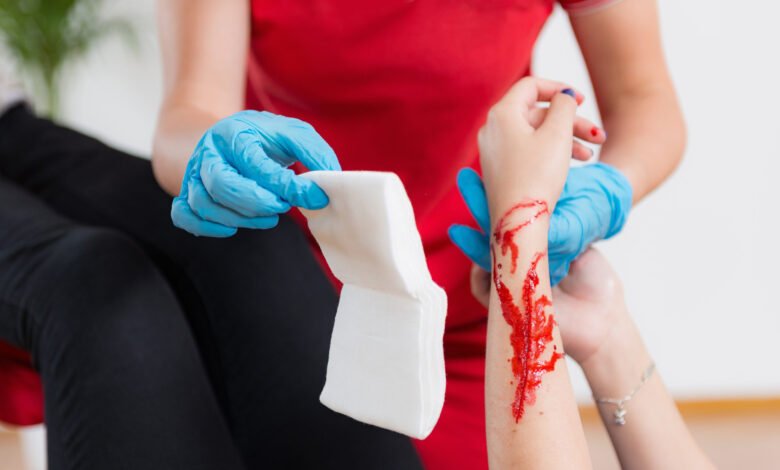
Step 2: Apply Direct Pressure
Direct pressure is the most effective way to control external bleeding:
- Place a clean cloth, gauze, or bandage directly over the wound.
- Use firm, continuous pressure with your hands.
- If blood soaks through, place additional layers on top—do not remove the first layer.
Pro Tip: Applying consistent pressure helps prevent further blood loss and stabilizes the patient.
Step 3: Use Pressure Bandages
Once initial bleeding is under control:
- Wrap the wound securely with a bandage while maintaining pressure.
- Ensure the bandage is snug but not so tight that it cuts off circulation.
- Elevate the injured area above heart level if possible.
Tip: Pressure bandages provide continued control and allow you to focus on monitoring the patient until help arrives.
Step 4: Apply a Tourniquet if Necessary
For severe extremity bleeding that cannot be controlled by direct pressure:
- Place a commercial or improvised tourniquet 2–3 inches above the wound.
- Tighten until bleeding stops.
- Note the time the tourniquet was applied and inform emergency personnel.
Callout Tip: Tourniquets are life-saving in severe cases but should be used carefully and only when direct pressure is insufficient.
Step 5: Monitor and Support the Patient
While waiting for help:
- Keep the patient lying down and calm.
- Monitor for signs of shock: pale skin, rapid pulse, shallow breathing.
- Continue applying pressure or adjusting bandages as needed.
- Keep the patient warm with a blanket.
Pro Tip: Your attentiveness and proper first aid technique can prevent complications and save the victim’s life.
Safety and Infection Control
- Always use gloves or a barrier to avoid contact with blood.
- Avoid touching the wound directly with bare hands.
- Properly dispose of used gauze or cloths to prevent contamination.
- Wash your hands thoroughly after providing first aid.
Tip: Infection control protects both the caregiver and the patient during emergency treatment.
Benefits of First Aid for Severe Bleeding Certification
- Life-Saving Skills: Learn to respond effectively in critical situations.
- Confidence in Emergencies: Reduce panic and act decisively.
- Professional Advantage: Ideal for healthcare workers, volunteers, and educators.
- Community Preparedness: Certified individuals can assist during accidents and disasters.
- Peace of Mind: Know that you are equipped to save lives whenever necessary.
Why Online Certification is Effective
- Flexible Learning: Complete modules from home or on the go.
- Interactive Lessons: Videos, quizzes, and scenario simulations reinforce skills.
- Instant Digital Certificate: Proof of certification is issued immediately after completion.
- Affordable: Eliminates the need for travel or in-person classes.
Pro Tip: Online training allows repeated practice and review of critical first aid techniques.
Step-by-Step Guide to Certification
- Visit CPR Certification Now: Navigate to the First Aid for Severe Bleeding Certification page.
- Register: Create your account and enroll in the course.
- Complete Training Modules: Learn how to recognize and treat severe bleeding effectively.
- Pass the Assessment: Demonstrate your knowledge through quizzes and scenario exercises.
- Download Your Certificate: Receive a digital certificate immediately for professional or personal use.
Tip: The course can be completed in one sitting or multiple sessions depending on your schedule.
Timeline for Certification
| Step | Duration |
| Registration | 5–10 minutes |
| Course Completion | 1–2 hours |
| Assessment | 15–30 minutes |
| Certificate Issuance | Immediate |
Pro Tip: Online certification allows you to gain life-saving skills in a short amount of time.
Cost of First Aid for Severe Bleeding Certification
- Basic Online Course: $30–$60
- Comprehensive Packages: $60–$100 (may include additional first aid modules)
- Optional In-Person Workshops: $75–$150
Pro Tip: Online certification provides an affordable and convenient way to learn critical skills.
Renewal and Refresher Training
- Validity: Certificates are typically valid for 2 years.
- Renewal: Complete online refresher modules to stay current with best practices.
- Purpose: Ensures you are ready to respond to emergencies confidently and effectively.
Tip: Plan ahead for renewal to maintain uninterrupted certification.
Frequently Asked Questions (FAQs)
1. Who should take this certification?
Anyone who may encounter severe bleeding situations, including workplace staff, volunteers, healthcare workers, and caregivers.
2. How long is the course?
1–2 hours for online completion, plus assessment.
3. Is prior first aid knowledge required?
No, it’s suitable for beginners and experienced individuals.
4. Do I get a certificate?
Yes, a digital certificate is provided immediately upon completion.
5. How often should I renew?
Every 2 years or as new course modules are released.
6. Can this course help professionally?
Yes, it enhances credentials for healthcare, workplace safety, and emergency response roles.
Conclusion: Be Ready to Save Lives
Severe bleeding is a life-threatening emergency that requires quick and effective action. First Aid for Severe Bleeding Certification equips individuals with critical skills, confidence, and knowledge to respond promptly and safely.
Online courses from CPR Certification Now allow efficient, accessible training with immediate certification.